Condensation (commonly encountered)
Condensation occurs when warm, moist indoor air meets a colder surface and the moisture turns to water. It typically shows as black spot mould in corners, around windows, behind furniture and in poorly ventilated rooms. It is often linked to occupation, heating, ventilation and insulation rather than a single building defect, although building defects or poor detailing can also contribute.
Penetrating damp
Penetrating damp is water entering through the building fabric — for example via defective roof coverings, blocked or leaking gutters, failed pointing or render, cracked masonry, or around openings. It is often localised, can appear higher up a wall, and tends to worsen after rain. The fix is to find and correct the point of water entry.
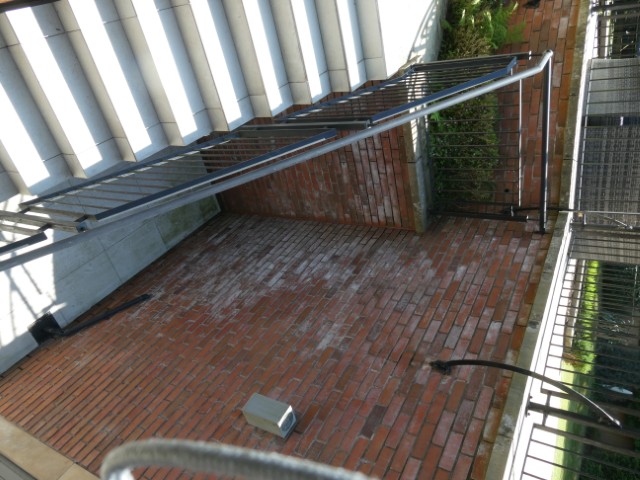
The white salt deposits above are efflorescence — salts left behind as water moves through masonry and evaporates. They are a useful indicator of persistent moisture, but they show where water is emerging, not necessarily where it is getting in.
Rising damp (and why it is over-diagnosed)
Rising damp is ground moisture drawn up through porous masonry by capillary action, usually where a damp-proof course is absent, ineffective or has been bridged (for example by raised external ground or render). It is typically limited to the lower part of a wall and can leave a tide mark and salt deposits.
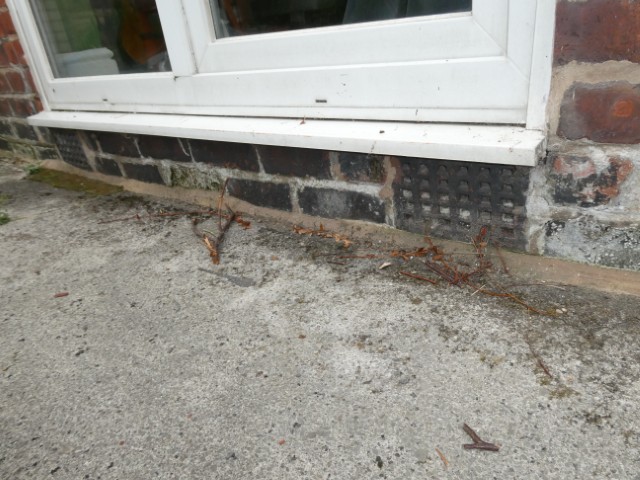
Bridging of this kind is one of the most common things we look for, and one of the most fixable: where raised ground, a path, a flower bed or added render carries moisture past the damp-proof course, lowering the external level often addresses the cause without any chemical treatment at all.
True rising damp is less common than it is often diagnosed — its symptoms overlap with condensation and penetrating damp, and a free-damp-survey from a firm selling treatment is not impartial. Distinguishing the type correctly, before any chemical injection or replastering, is exactly what an independent inspection is for.
Independent visual damp assessment
If damp is already visible in a property you own or are buying, the useful first step is establishing which kind it is, because the three have different causes and different remedies — and because the assessment is worth more when whoever carries it out has nothing to sell you.
An independent visual damp assessment covers:
- a visual inspection of the affected areas and their context
- moisture readings where appropriate
- the likely causes and contributory factors
- recommended next steps
It is non-invasive. That means no opening up, no specialist leak detection, no thermal imaging and no laboratory analysis. Where the evidence points to something that needs one of those, the report says so and recommends it rather than guessing.
What it is not
This is the part that matters most, because the word "damp survey" is used by two very different kinds of business.
Anslow is an independent surveying practice, not a damp-proofing contractor and not a PCA-accredited damp specialist. We do not produce contractor-style damp-proofing specifications, we do not quote for remedial work, and we sell no treatment of any kind.
That is a limitation and it is also the point. A free damp survey from a firm that sells damp treatment is not an impartial assessment, and rising damp in particular is diagnosed far more often than it occurs. An assessment from someone with no remedial work to sell can only tell you what it found.
How to instruct it
Where damp is the specific concern, a Property Defects Survey from £450 is the focused option — it investigates one problem in depth and sets out the likely cause, what should be done and an indication of repair costs.
Where damp is one of several things you want checked across a whole property, it falls within the scope of a Level 2 Home Survey or a Level 3 Building Survey instead.
In every case the report covers what is visible and accessible on the day. Concealed construction, covered floors and inaccessible voids limit what any non-invasive inspection can establish, and the report is explicit about where that applies.
If you want damp looked at on a specific property, send us the address for a fixed price.
Key takeaways
- Condensation is commonly encountered and is often linked to occupation, heating, ventilation and insulation, although building defects or poor detailing can also contribute.
- Penetrating damp means water is getting in — find and fix the entry point.
- Rising damp is real but frequently over-diagnosed and mistreated.
- The different causes can overlap visually, so correct assessment is important before deciding on remedial works.
- An independent assessment helps avoid paying for the wrong treatment.
Frequently asked questions
How do I know which type of damp I have?
The patterns differ — location, height, timing relative to weather, and salts or mould — but they overlap and are easily confused. An independent inspection can help establish the likely type before money is spent on treatment.
Is a damp-proofing company's free survey reliable?
A free survey from a firm that sells treatment is not impartial. An independent surveyor has no interest in selling you a particular remedy.
What is a damp survey?
In practice it means an inspection that establishes what is causing visible damp, rather than a separate category of survey. At Anslow it is an independent visual damp assessment: a visual inspection, moisture readings where appropriate, the likely causes and contributory factors, and recommended next steps. It is instructed as a Property Defects Survey from £450 when damp is the specific concern, or forms part of a Level 2 or Level 3 survey when you want the whole property assessed.
Is the inspection invasive?
No. It is non-invasive: no opening up, no specialist leak detection, no thermal imaging and no laboratory analysis. The assessment covers what is visible and accessible on the day, and where the evidence points to something needing further specialist investigation the report recommends it rather than guessing.
Are you a damp specialist or PCA-accredited?
No, and we do not present ourselves as one. Anslow is an independent surveying practice — not a damp-proofing contractor and not a PCA-accredited damp specialist. We carry out independent visual damp assessments, and we do not produce contractor-style damp-proofing specifications, quote for remedial work or sell treatment of any kind. That separation is what keeps the assessment impartial.
Can a survey assess damp evidence in the property I'm buying?
A survey can identify and explain visible damp evidence, comment on likely causes, and recommend further specialist investigation where required before you commit.
This guide is general information, not advice on a specific property. Every building differs — for findings specific to a property you are buying, book a survey.