Settlement vs subsidence vs heave
Settlement is downward movement caused by the weight of the building compressing the ground beneath it. It often happens relatively early in a building's life and is frequently not progressive.
Subsidence is downward movement of the ground itself, unrelated to the building's load — commonly from shrinkable clay drying out (often tree- or drought-related), water washing out ground from leaking drains, or historic mining. Subsidence can be progressive and is often the form of movement that raises the greatest concern for buyers, lenders and insurers. Heave is the opposite: ground expanding upward, for example clay swelling after a large tree is removed.
Possible warning signs
Indicators that movement may be significant include new or widening cracks (often diagonal and tapering, wider at one end), cracks visible both inside and outside in the same place, cracking around door and window openings, and doors or windows that have started to stick. Many cracks, however, are minor and unrelated to ground movement.
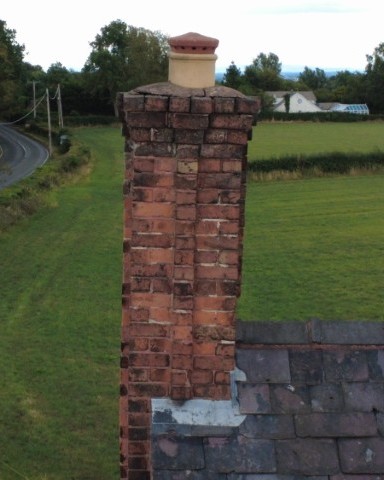
Movement is not always in the walls. The stack above has gone noticeably out of vertical — a good example of why an inspection looks at the whole building rather than only the cracks that first prompted the concern.
Why this needs expert assessment
Distinguishing harmless historic movement from active, progressive subsidence may require monitoring over time and structural engineer input. A survey records the evidence, gives an informed view of likely cause and significance, and tells you whether further specialist investigation is needed before you commit — it does not replace engineering monitoring where that is warranted.
Key takeaways
- Settlement (building load) differs from subsidence (ground movement).
- Subsidence can be progressive; heave is upward ground movement.
- Diagonal, tapering cracks and sticking doors can be warning signs.
- Many cracks are minor — pattern, width and progression matter.
- Suspected active movement may need monitoring or structural engineer input.
Frequently asked questions
Is all cracking a sign of subsidence?
No. Many cracks are minor and caused by thermal movement, shrinkage or seasonal effects. Only certain patterns suggest possible structural movement, and even then assessment is needed to confirm.
Can a survey confirm subsidence?
A survey identifies and explains the evidence and likely cause, and advises whether monitoring or a structural engineer's input is needed. Confirming active subsidence usually requires monitoring over time.
Does subsidence make a property unmortgageable?
Not necessarily, but it can affect lending and insurance and should be properly understood before you commit. Get specialist advice on any property with a history of movement.
This guide is general information, not advice on a specific property. Every building differs — for findings specific to a property you are buying, book a survey.