What is a lintel?
A lintel is the beam that bridges an opening in a wall — a window or a door — carrying the weight of the masonry above it and transferring that load safely down into the wall on either side. Without it, the brickwork or blockwork above the opening would have nothing to hold it up.
You rarely see a lintel once a house is finished, because it usually sits hidden behind the brickwork, render or plaster around the opening. But it's doing a job every day, and when it stops doing that job the effects show up in the wall above — which is exactly why lintels matter to buyers even though they're out of sight.
Types of lintel
Different properties, walls and opening widths call for different lintels. The types you're most likely to come across are:
- Concrete lintels — precast or reinforced concrete beams set above the opening. They're strong, common in twentieth-century and modern homes, and often span wider openings.
- Steel lintels — pressed-steel units, including the well-known "Catnic"-style profiles designed for cavity walls, which support both the inner and outer leaf. Widely used in modern construction.
- Timber lintels — traditional in older properties, where a timber beam spans the opening. Timber can be perfectly sound, but it is vulnerable to rot and beetle over time, especially where damp has got in.
- Brick, stone or arched lintels — here the masonry itself is arranged to span the opening, either as a flat "soldier" course or as a shaped brick or stone arch. Common on older and period homes and often a feature in their own right.
Signs of a failed or failing lintel
Because a lintel sits out of sight, a problem usually announces itself in the wall around the opening. Common signs include:
- new or widening cracks in the wall above a window or door;
- a sagging or bowing head to the opening, where the brickwork above has begun to drop;
- displaced brickwork — bricks that have slipped, stepped or moved above the opening;
- rust staining or expansion where a steel lintel is corroding and pushing the surrounding masonry apart;
- gaps opening up around the frame or above the opening.
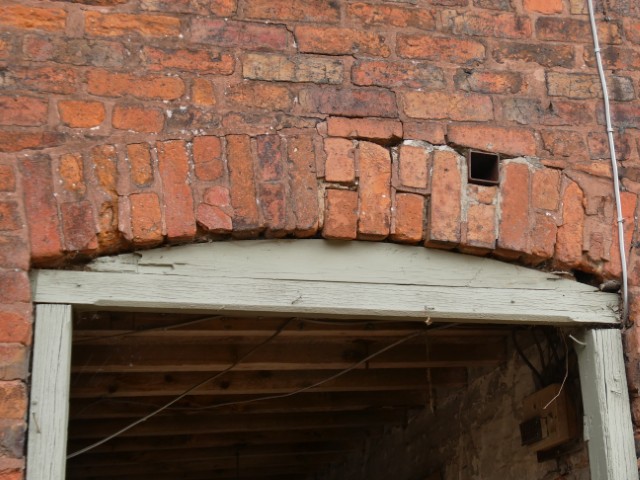
The example above shows what the more serious end of this looks like: the brickwork over the opening has lost proper support and begun to break up. Most cases are far less advanced than this, which is exactly why the subtler signs in the list above are worth taking seriously.
Not every crack above a window means the lintel has failed — many are cosmetic or the result of old, long-finished movement. But these patterns can indicate a lintel that is no longer carrying the load as it should, and they warrant proper investigation rather than guesswork.
Why lintels matter when buying a property
A failed lintel is a real, sometimes costly repair. Putting one right can mean replacing the lintel and rebuilding the brickwork above it, which is disruptive and rarely cheap — and it's a common finding on surveys of older and altered homes. That combination is exactly why it's worth catching before you commit to a purchase.
Spotting a lintel problem before you buy puts you in a far stronger position. It lets you factor a genuine repair into the price, negotiate with your eyes open, or plan the work rather than inheriting an unwelcome surprise. A focused property defects report is one way to investigate a specific concern like cracking above an opening in more depth.
What a survey checks — and its limits
It's worth being clear about what a survey can and can't do here. A surveyor visually assesses the lintels that are accessible, along with the evidence around each opening — the cracking, distortion and displaced brickwork described above — and reports any concern. From that evidence a surveyor forms a professional view on whether a lintel appears to be performing or whether something is going on.
The limit is that many lintels are concealed behind render, plaster or a brick outer skin and can't be seen directly. Where a lintel is hidden but the surrounding evidence suggests a problem, the right step is to flag it clearly and recommend further investigation — rather than claiming certainty about a component nobody can see. A good survey tells you plainly what has been seen, what it might mean, and what needs looking into next.
For a property where structural elements like lintels are a real concern — an older, altered or previously cracked home — a Level 3 Building Survey, from £495, is the appropriate level, because it looks in the most detail at the structure and reports fully on the evidence around openings. If foundation movement is also on your mind, our guide to house foundations explains what a survey can and can't check below ground.
Key takeaways
- A lintel is a beam that bridges an opening and carries the load of the wall above it.
- Common types are concrete, steel (such as Catnic-style), timber, and brick or stone arched lintels.
- Cracking above a window or door, a sagging opening head, displaced brickwork or rust staining can all signal a failing lintel.
- A failed lintel is a real, sometimes costly repair and a common survey finding — catching it before purchase can inform price and negotiation.
- A surveyor assesses accessible lintels and the evidence around openings; concealed or rendered lintels can't always be seen, so the survey flags concerns and recommends further investigation.
Frequently asked questions
What is a lintel?
A lintel is a beam that bridges an opening in a wall, such as a window or door. It carries the weight of the masonry above the opening and transfers that load safely down into the wall on either side. Without a lintel, the brickwork or blockwork above an opening would have nothing to support it and would eventually crack, sag or collapse into the gap.
What are the different types of lintel?
The common types are concrete lintels (precast or reinforced, widely used above openings), steel lintels such as the pressed-steel 'Catnic'-style units common in cavity walls, timber lintels (traditional in older properties, and vulnerable to rot and beetle over time) and brick, stone or arched lintels, where the masonry itself is arranged to span the opening. The right type depends on the age of the property, the wall construction and the width of the opening.
What are the signs of a failed lintel?
Typical warning signs include new or widening cracks in the wall above a window or door, a head of the opening that appears to sag or bow, brickwork that has slipped or become displaced above the opening, rust staining or expansion where a steel lintel is corroding, and gaps opening up around the frame. These point to a lintel that is no longer carrying the load as it should and warrant proper investigation rather than assumptions.
Does a survey check lintels?
A survey assesses lintels as far as they can be seen. A surveyor visually inspects accessible lintels and, just as importantly, the evidence around each opening — cracking, distortion and displaced brickwork — and reports any concern. Many lintels are concealed behind render, plaster or a brick outer skin and can't be seen directly, so where the evidence suggests a problem the surveyor flags it and recommends further investigation rather than confirming the lintel's condition outright.
How serious is a cracked or failed lintel?
It varies. Some cracking above an opening is minor and long-settled, while a genuinely failed lintel is a real structural repair that can be disruptive and costly, sometimes needing the lintel replaced and the brickwork above rebuilt. Because the seriousness depends on the cause and extent, any repair should follow proper diagnosis by a suitably qualified professional rather than being judged from the symptoms alone.
This guide is general information, not advice on a specific property. Every building differs — for findings specific to a property you are buying, book a survey.