Most survey findings are not exotic. Across a few hundred inspections the same categories come up again and again — roofs and chimneys, moisture, movement, timber and drainage — and what separates a minor defect from an expensive one is usually condition, cause and whether it is getting worse.
Every photograph below was taken by Chris Anslow on a real inspection. Properties are not identified. They are here because a description of a perished roofing membrane or a bridged damp-proof course only goes so far — seeing one makes the point faster.
Roof coverings, chimneys and rainwater goods
Roofs account for a disproportionate share of significant findings, for a simple reason: they are exposed to everything, expensive to put right, and almost impossible to assess properly from ground level.
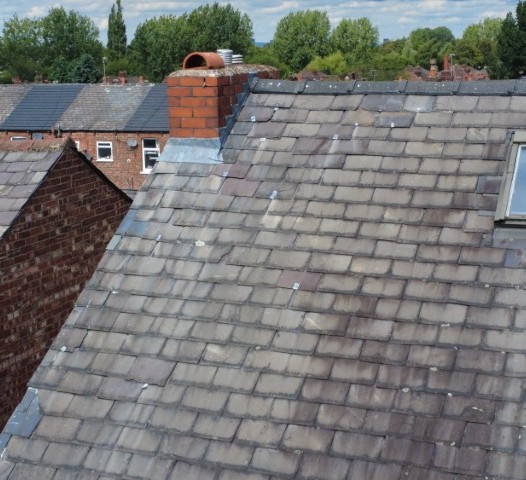
An original covering that has been patched repeatedly over decades is not necessarily a defect today, but it does tell you something about the budget the property is likely to need. The distinction that matters to a buyer is between a roof needing occasional repair and one approaching wholesale replacement.
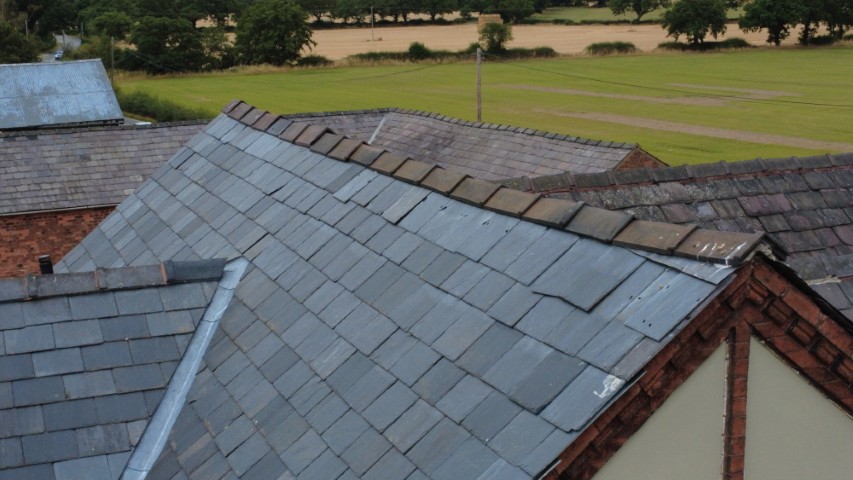
A new covering is not automatically a good covering. Here the ridgeline is visibly deflecting, which points at the structure beneath rather than the slates on top — a reminder that recent work is worth looking at as carefully as old work.
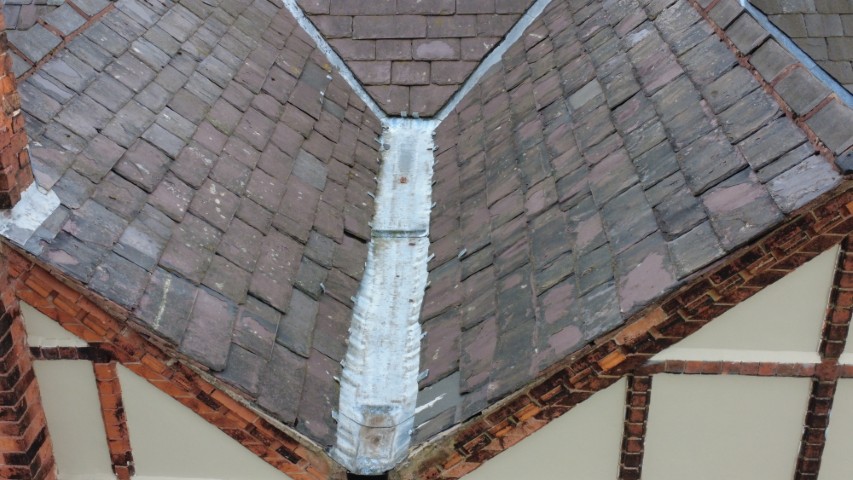
Valleys and gullies concentrate water, so they fail first and leak worst. Complex roof shapes have more of them.
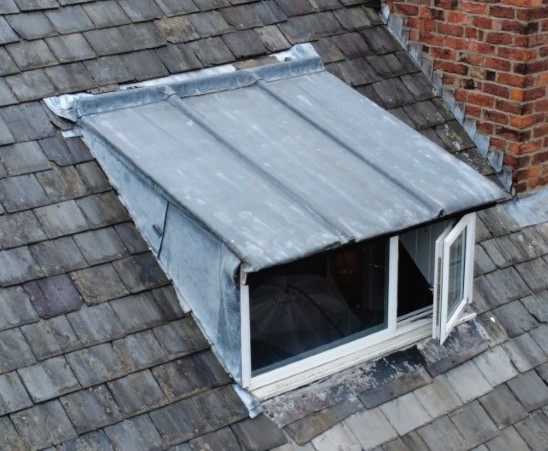
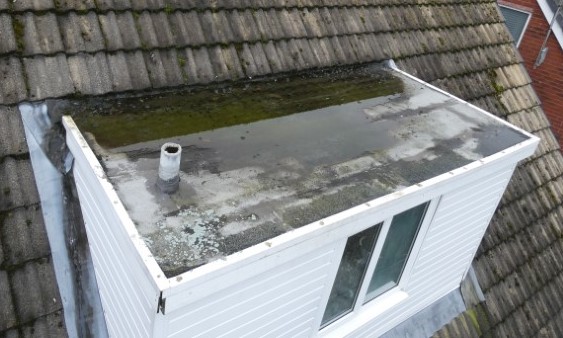
Standing water on a flat roof is one of the clearest signs that a covering is at or beyond the end of its life. Felt of this age rarely responds well to patching.
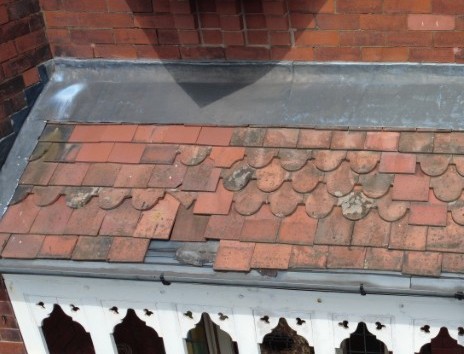
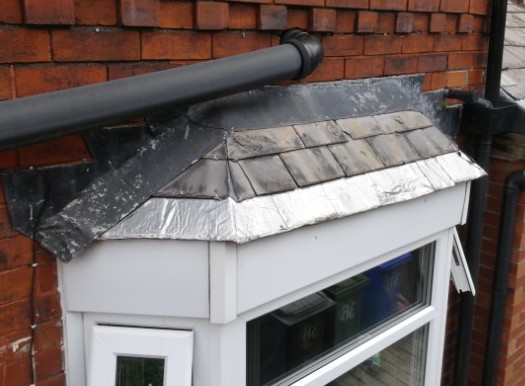
Flash-band is a temporary product used permanently more often than it should be. Where it appears, it is usually worth asking what it was covering up.
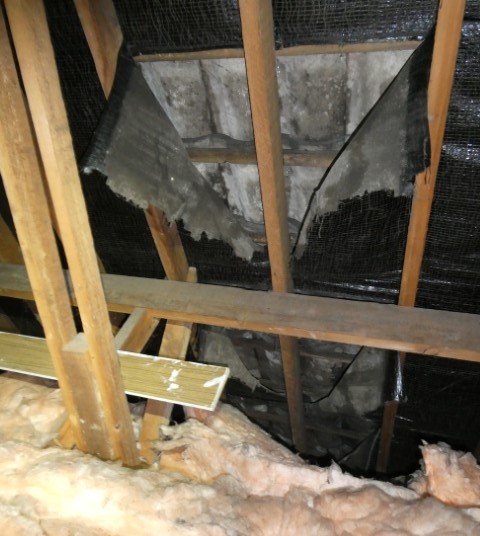
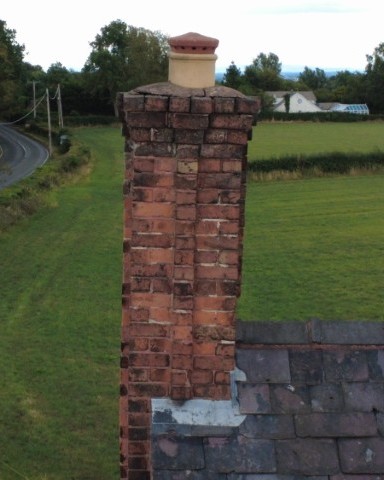
Chimney stacks are exposed on all sides, often unused, and frequently the least-maintained element on a house. A stack out of vertical to this degree is a structural matter rather than a maintenance one.
Damp and moisture
Damp is almost always a symptom. The useful question is not "is there damp?" but "where is the water coming from?" — because condensation, penetrating damp and moisture rising through a wall call for entirely different remedies. Our damp guide goes through the distinctions.
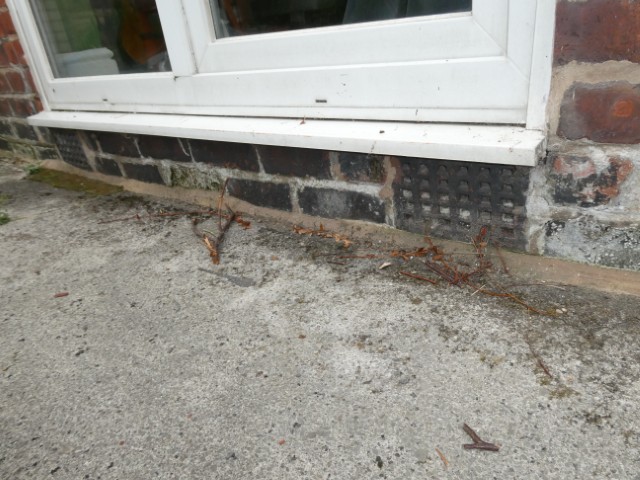
One of the most common and most fixable causes we see. Where a path, patio or flower bed carries moisture past the damp-proof course, lowering the external level often solves the problem without any chemical treatment.
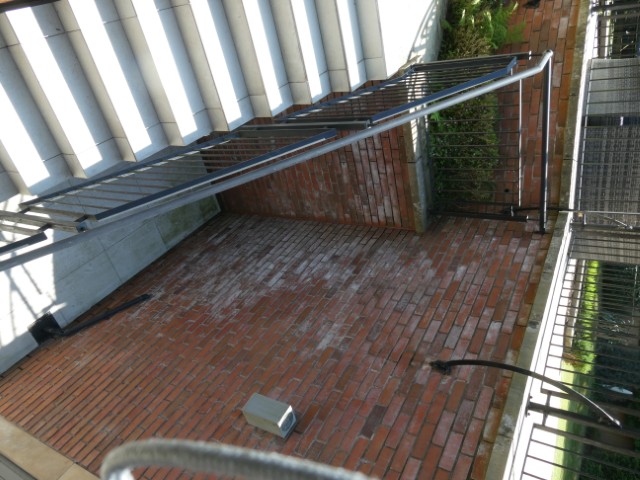
Efflorescence — the white salt deposit left as water moves through masonry and evaporates — marks where water is emerging, which is not always where it is entering.
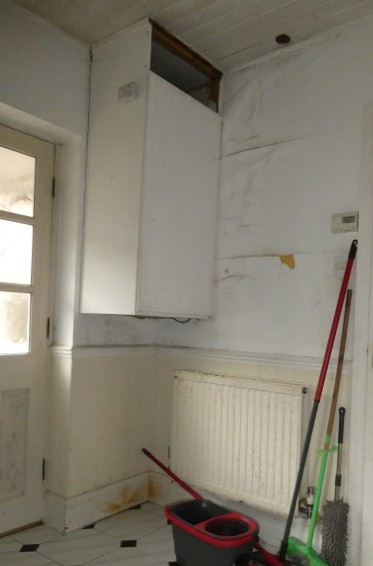
Damage below a bathroom is one of the more straightforward diagnoses, and one of the more expensive to make good once decorative finishes are involved.
Structural movement and timber
Not every crack means movement, and not every movement is ongoing. Cracking is assessed on width, pattern, position and whether anything suggests it is progressing — the subject of our guides on cracks in walls and subsidence, settlement and heave.
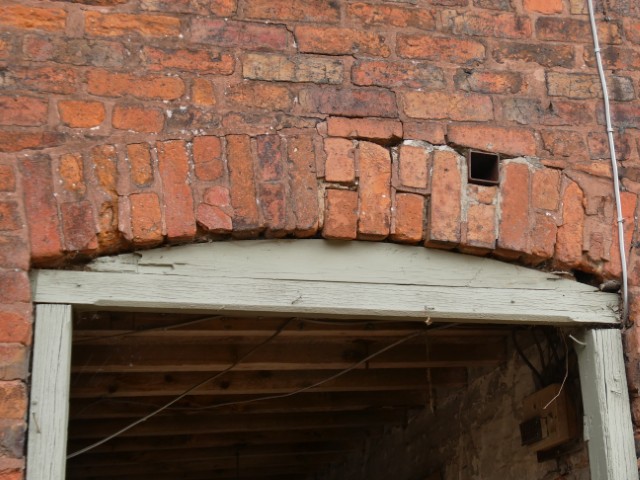
Failure above an opening usually points at the lintel — the beam carrying the wall above a window or door. Our guide on what a lintel is covers the subtler warning signs that come long before this stage.
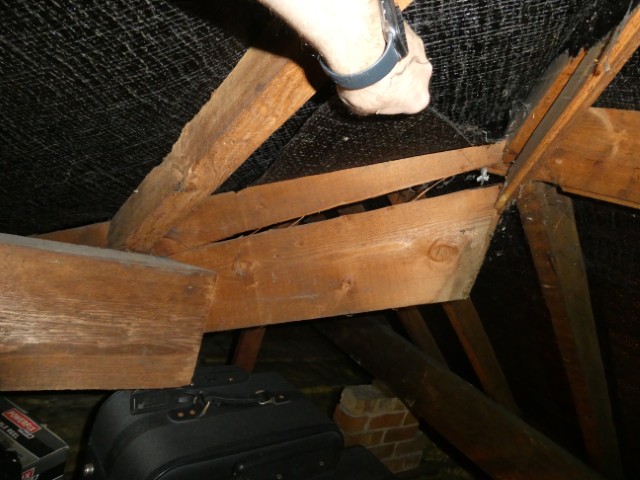
Roof spaces are where structural timber can actually be seen, which is why getting into one matters.
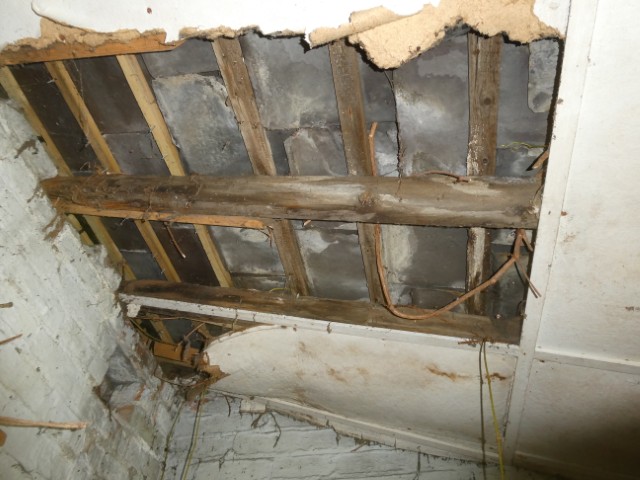
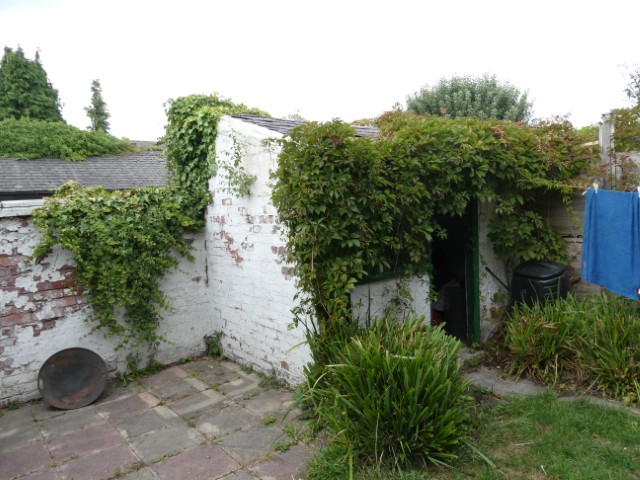
Outbuildings, garages and garden structures are easy to overlook when viewing a property, and they carry real cost when they have reached this condition.
External fabric, joinery and drainage
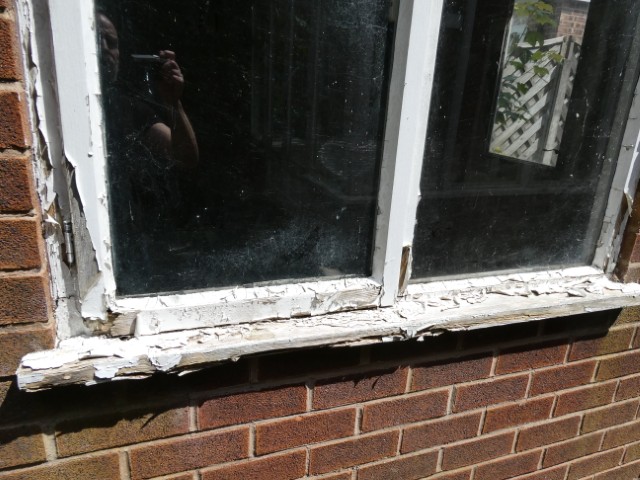
Timber joinery fails gradually and is often masked by paint until it is probed. Replacement of a full set of windows is a significant cost that rarely shows up in a viewing.
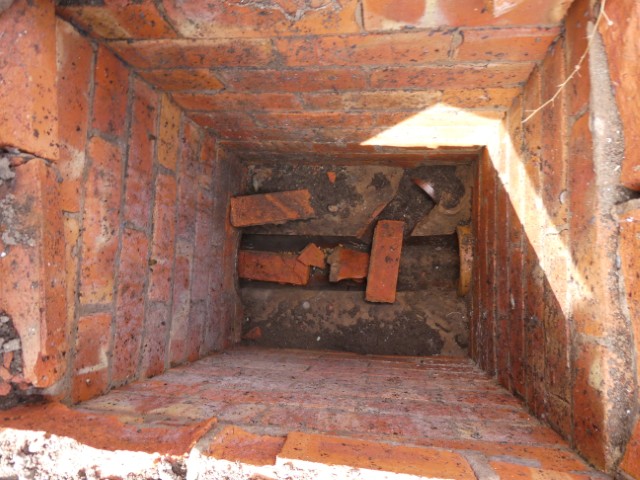
Lifting an inspection chamber cover takes a minute and regularly changes the picture. Collapsed brickwork inside a chamber is both a drainage defect in its own right and a plausible cause of damp found elsewhere on the property.
The range of property we inspect
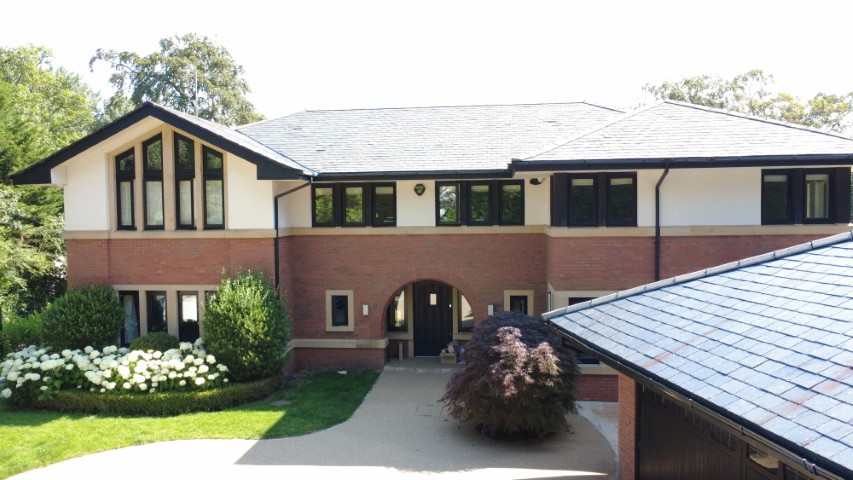
Survey work spans everything from compact modern houses to substantial period and higher-value homes, and the inspection scales with the building — larger properties simply have more roof, more elevations and more to examine.

What this means for a buyer
Almost every property has defects. The ones that matter are those that are costly, progressive, or currently hidden — and the point of a survey is to tell you which of the things you are looking at fall into those categories, and which are simply the ordinary maintenance any home needs.
If a specific concern has already come up — cracking, damp, a roof you are unsure about — a targeted property defects report can focus the fee on that one issue. Where a property is older, larger or altered, a Level 3 Building Survey from £495 gives the fuller picture, including likely causes and repair considerations. If you are not sure which you need, ask us before you book.
Key takeaways
- Roof coverings, chimneys and rainwater goods account for a large share of significant survey findings.
- Damp is usually a symptom — the useful question is where the water is coming from.
- Structural movement is judged on pattern and progression, not on the presence of a crack.
- Timber decay is often hidden until a roof space or a window frame is examined closely.
- Drainage defects are common, easy to miss, and frequently the cause of damp found elsewhere.
Frequently asked questions
What are the most common defects found in a house survey?
Roof coverings and chimney stacks approaching the end of their serviceable life, moisture reaching the building fabric through defective rainwater goods or raised external ground levels, timber decay to windows and roof structures, and drainage problems. Most homes have several minor defects; the survey's job is to identify which ones matter.
What are red flags on a house survey?
The findings worth taking seriously are usually those that are expensive, progressive or hard to see: evidence of ongoing structural movement, a roof or chimney at the end of its life, persistent damp whose cause has not been established, and alterations carried out without records. A survey exists to separate those from routine maintenance.
Are these photographs from your own surveys?
Yes. Every image on this page was taken during an inspection carried out by Chris Anslow. Properties are not identified, and the photographs are used here to illustrate defect types rather than to describe any particular home.
Which survey level identifies defects like these?
All levels record visible defects, but the depth of explanation differs. A Level 2 Home Survey records condition and flags concerns; a Level 3 Building Survey goes further into likely causes, consequences and repair considerations, which is usually the right choice for older, altered or more complex properties.
This guide is general information, not advice on a specific property. Every building differs — for findings specific to a property you are buying, book a survey.